Now available · Dual Peptide Scalp Serum ↗

Papa & Filles / Body care

Projected release ·

Copper
Peptide Complex.

Peptide care, in a new form.

Our next chapter in body care brings GHK-Cu, KPV and glutathione into one patch concept. Get to know the three ingredients behind it.

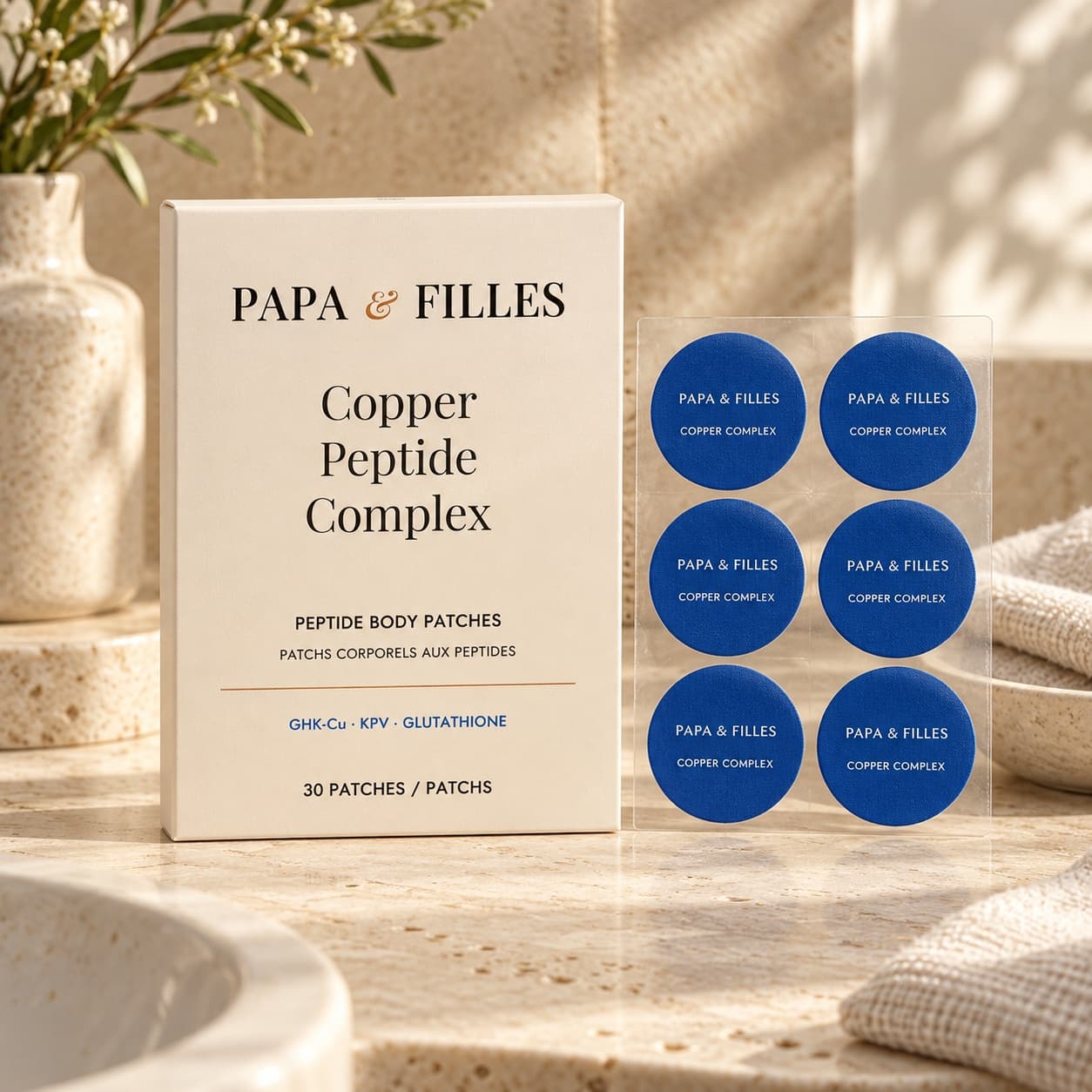
30 round body patches Planned format

The release date is an estimate and may change. Join for final product details and availability.

Copper Peptide Complex packaging preview with a cream carton and six round blue branded patches on a clear backing
Packaging preview. Final presentation may change.

Inside the idea

Three ingredients.
Different roles.

Small molecules can have very different jobs. Here is what each one is, what researchers study it for, and where that research comes from.

01

The copper peptide

GHK-Cu

Skin structure research

GlycineHistidineLysine+ Copper

What it is

GHK is a short chain of three amino acids: glycine, histidine and lysine. It binds copper to form GHK-Cu. The “Cu” is the chemical symbol for copper.

Why it interests us

Researchers study GHK-Cu for its effects on collagen production and the supporting material around skin cells. Collagen is one of the proteins that gives skin its structure.

Look at the research

A 1988 laboratory study found increased collagen synthesis in fibroblast cultures exposed to GHK-Cu. Fibroblasts are cells involved in making the skin’s supporting matrix. This was a cell-culture experiment, not a trial of body patches.

Maquart et al. · FEBS Letters, 1988 Explore our GHK-Cu research guide
02

The three-letter peptide

KPV

Skin-response research

LysineProlineValine

What it is

KPV stands for lysine, proline and valine. It is a small peptide sequence found at the end of alpha-melanocyte-stimulating hormone, a signalling molecule in the body.

Why it interests us

KPV interests researchers studying the signals involved in inflammation and oxidative stress. These are processes cells use and respond to when exposed to stress.

Look at the research

A 2025 study examined KPV in cultured human skin cells and a three-dimensional skin model exposed to fine airborne particles. It reported changes in oxidative-stress and inflammatory signalling. It did not test these patches or establish a benefit in people wearing them.

Sung et al. · Tissue & Cell, 2025
03

The cellular antioxidant

Glutathione

Antioxidant biology

Glutamic acidCysteineGlycine

What it is

Glutathione is made from glutamic acid, cysteine and glycine. It is a tripeptide too, and occurs naturally in the body.

Why it interests us

Within cells, glutathione is part of the antioxidant system that helps manage reactive molecules and maintain chemical balance. That is why it appears in discussions of oxidative stress and skin biology.

Look at the research

The US National Cancer Institute identifies glutathione as a naturally occurring tripeptide with antioxidant activity. This describes the molecule’s biological role; it does not establish absorption or antioxidant effects from our finished patch.

National Cancer Institute · Glutathione definition

The bigger picture

Understand the ingredients.
Then the formula.

The concept brings together interest in skin structure, cellular responses and antioxidant biology. Each ingredient has its own research story.

A finished patch has its own questions to answer, including ingredient amounts, stability, release and how it interacts with skin. Ingredient research alone does not establish the performance of this combination or this format.

Read our guide to peptide patches

Before the first patch

A little more
clarity.

Are all three ingredients peptides?

GHK and KPV are tripeptides, meaning each contains three amino acids. GHK-Cu is GHK bound to copper. Glutathione is also a tripeptide, best known for its role in the body’s antioxidant system. They are different molecules with different research backgrounds.

Are these the same ingredients as the Dual Peptide Scalp Serum?

They share GHK-Cu. Our Dual Peptide Scalp Serum features GHK-Cu and AHK-Cu. The upcoming Copper Peptide Complex patch concept features GHK-Cu, KPV and glutathione. They are separate formulas and formats.

What can ingredient research tell me about the patches?

Ingredient studies explain the scientific interest in each molecule. They do not, by themselves, establish how much is released from a patch, passes through skin, or produces a particular result. We will share verified finished-product information as it becomes available.

How much of each ingredient is in a patch?

The final amounts, complete ingredient list and application directions have not yet been published. The three featured ingredients shown here are a preview, not the complete formula or a dosage guide.

When can I order the patches?

The projected release is November 15, 2026. This is an estimate and may change. Join the patch launch list below for product details and availability updates. The planned pack contains 30 round patches. Joining is free and does not reserve a pack or place an order.