The first 500 bottles · Coming November 1, 2026 ↗

The Papa & Filles research library

Ingredient science.
Made clear.

Peptides are small chains of amino acids. Bind certain peptides to copper and you create molecules with their own research story. Start with the two in our concentrate.

Explore what was studied, why it interests us, and what it can—and cannot—tell us about a daily scalp-care formula.

Start with the scalp-peptide guide
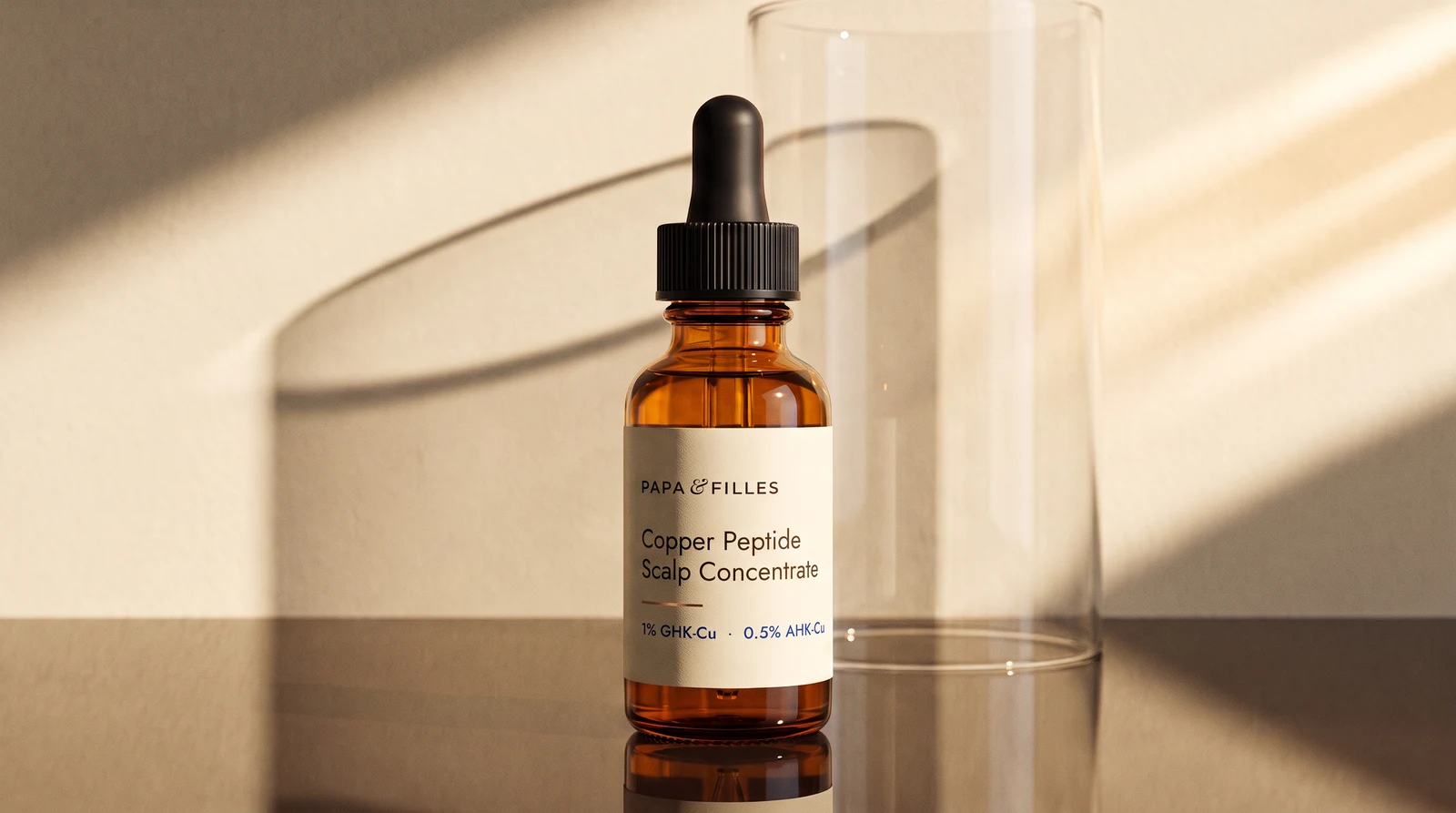
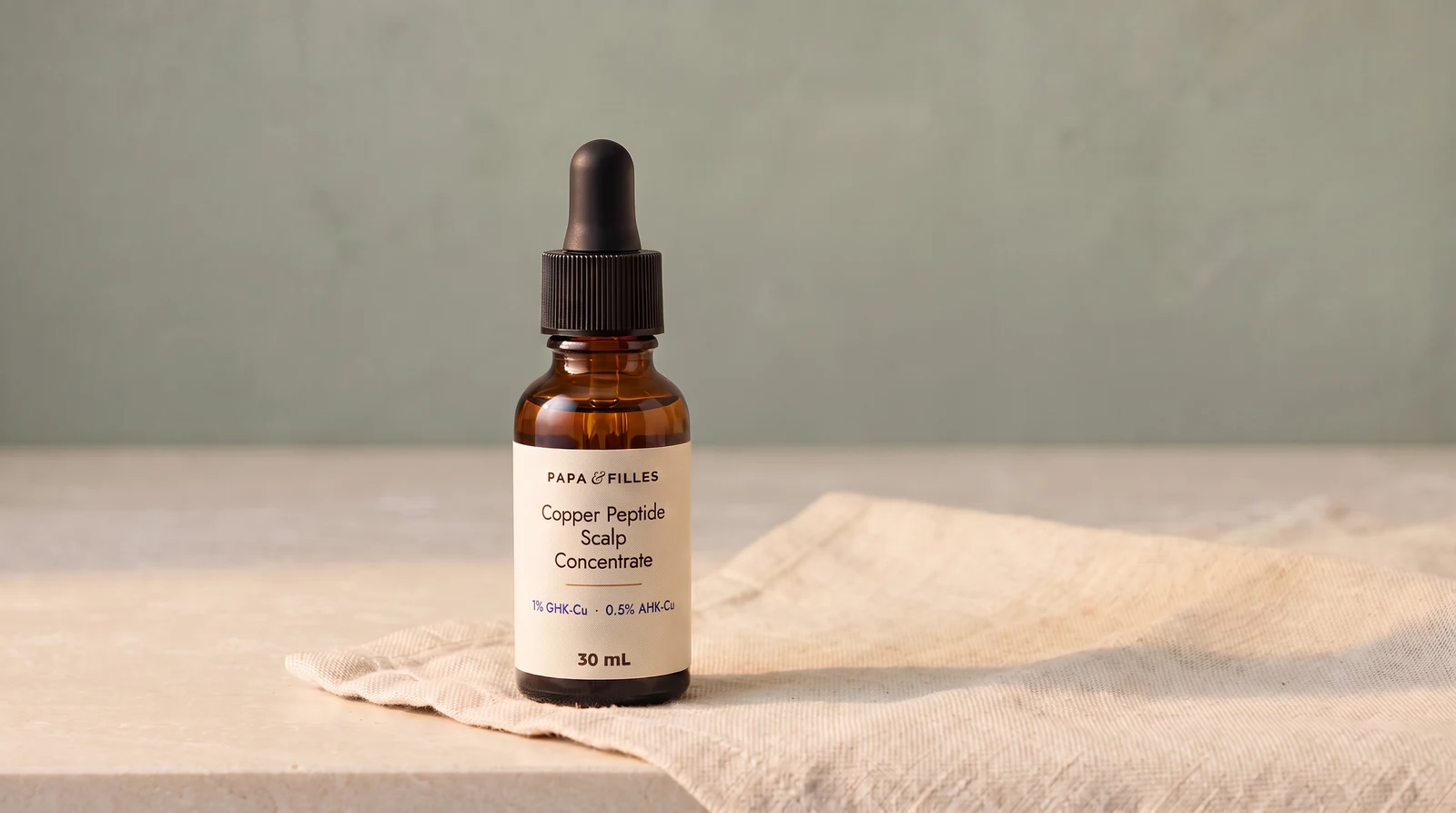
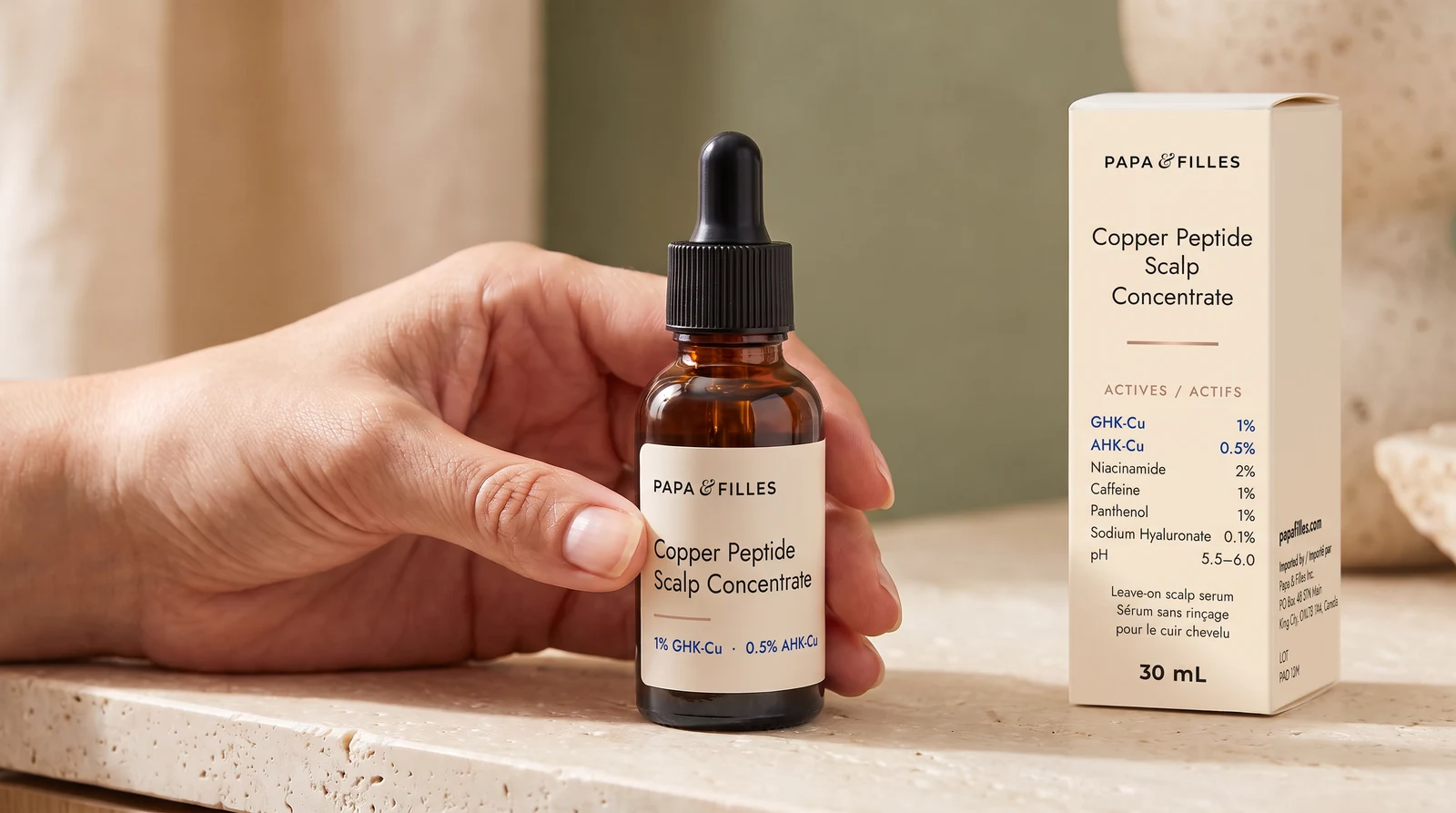
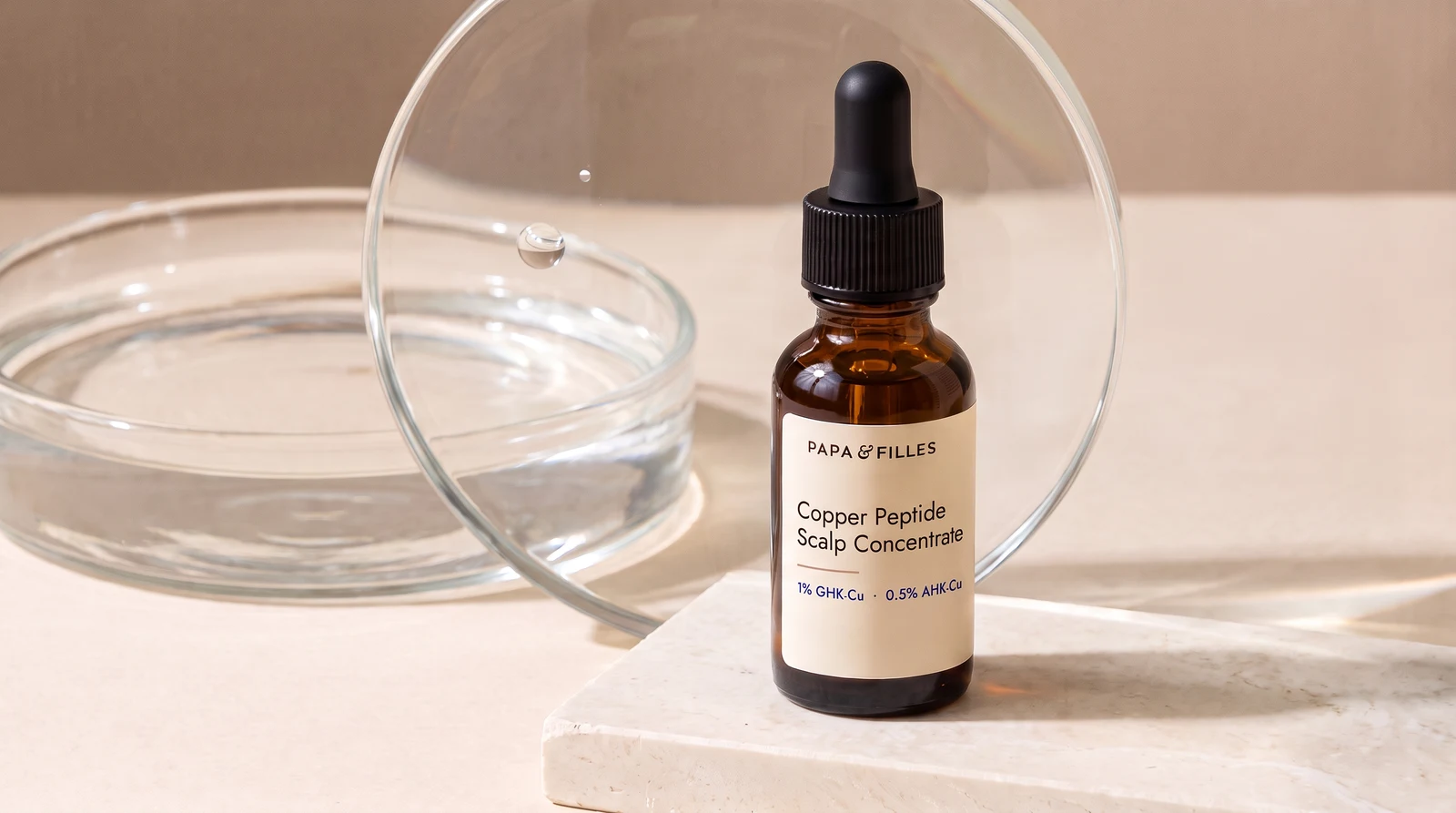
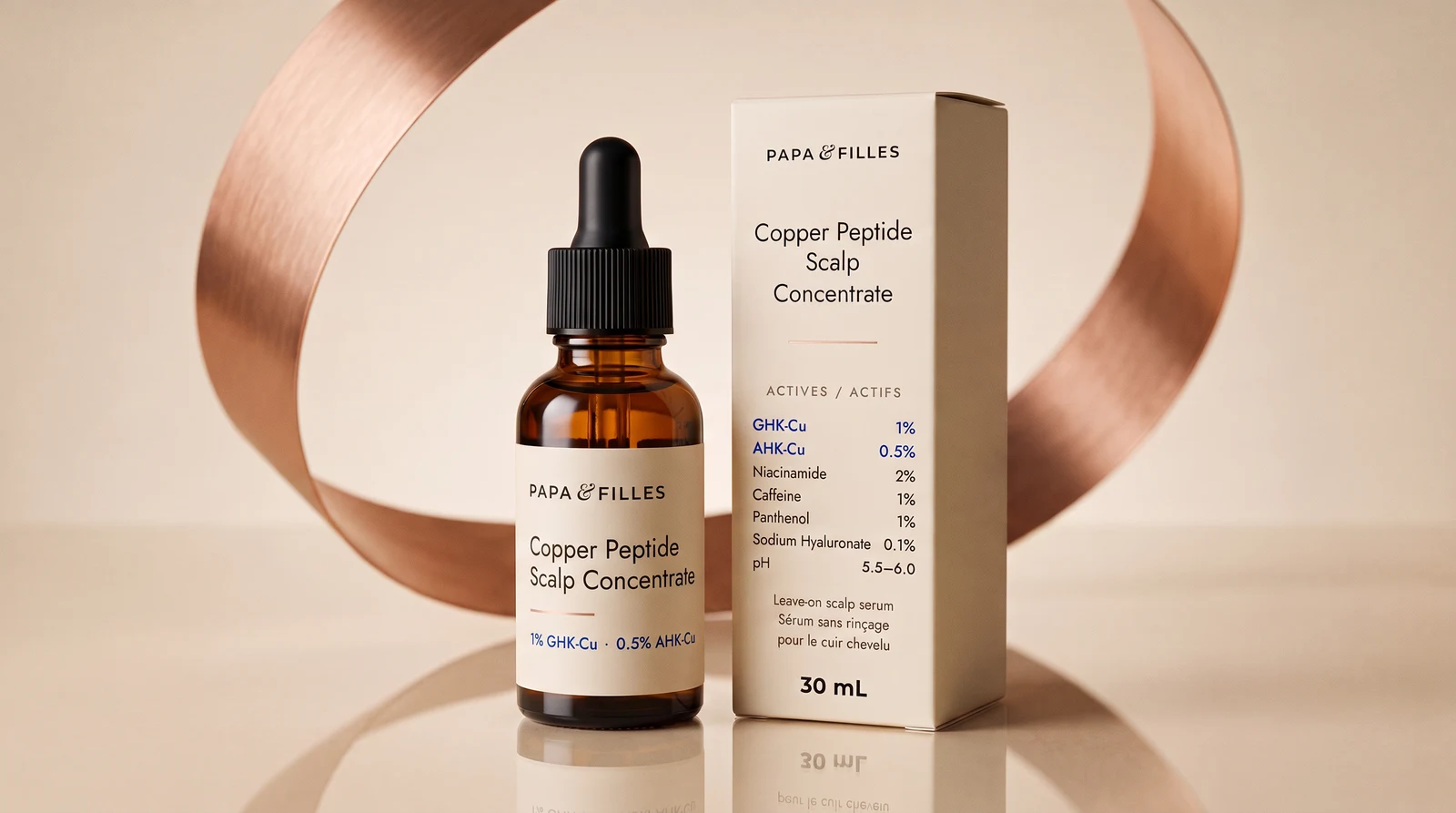
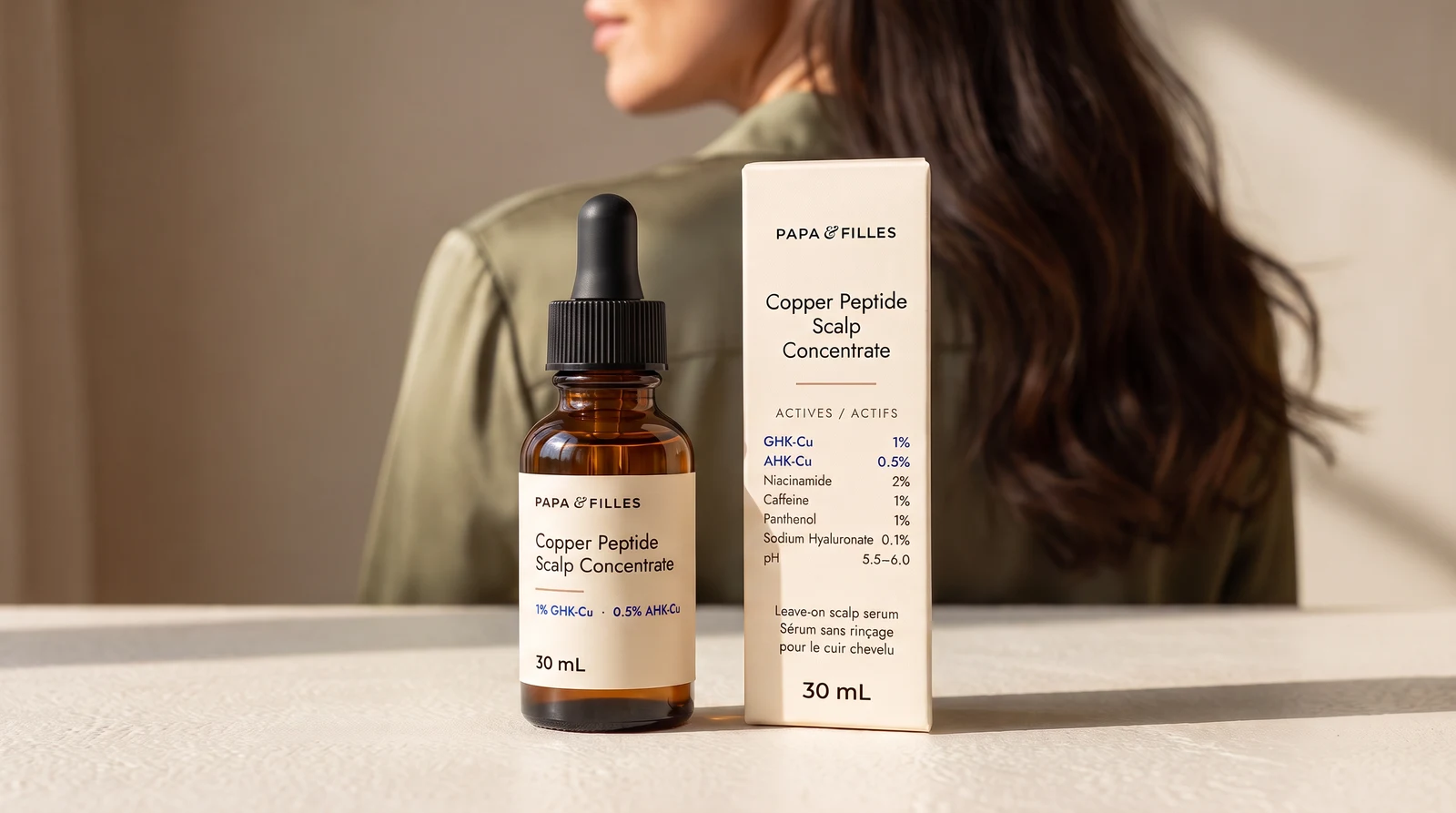
Papa & Filles Copper Peptide Scalp Concentrate and carton in an editorial product composition

Two copper peptides / Four supporting ingredients

The formula, one ingredient at a time.

The percentages below are the featured formula panel for our Copper Peptide Scalp Concentrate. This panel is not the complete ingredient list.

The first copper peptide

GHK-Cu1%

Glycine, histidine and lysine form a three-amino-acid peptide that binds copper. Researchers have investigated its effects on collagen production in cultured skin cells.

Evidence context: Laboratory skin-cell research
The hair-follicle connection

AHK-Cu0.5%

Alanine takes the place of glycine. That small change creates a distinct copper peptide, studied in isolated human hair follicles and dermal papilla cells.

Evidence context: Isolated follicles and cell culture

More than a familiar name

Caffeine1%

This small molecule has been investigated in laboratory hair-follicle cultures. Our guide also examines human research and why the tested formula matters.

Evidence context: Ingredient and formula-specific studies

The skin-barrier perspective

Niacinamide2%

The scalp is skin. Research on this form of vitamin B3 explores skin hydration and barrier function, an important context for everyday scalp care.

Evidence context: Skin-barrier research

A place for moisture

Panthenol1%

Provitamin B5 is used as a humectant and conditioning ingredient. A humectant helps attract and retain water; our guide explains its role in a formula.

Evidence context: Hydration and cosmetic ingredient function

The water-binding ingredient

Sodium hyaluronate0.1%

The sodium salt of hyaluronic acid is a familiar humectant in skin care. Alongside panthenol, it completes the moisture-focused part of our featured ingredient panel.

Evidence context: Water-binding properties and skin research

How we read a study

The details
make the difference.

  1. What was tested?

    Skin cells in a laboratory, isolated hair follicles and people using a product answer different questions. We identify the study setting.

  2. Which formula and concentration?

    A result belongs to the material and conditions tested. A shared ingredient name does not make two finished products equivalent.

  3. What does that mean for this concentrate?

    Ingredient research explains our interest in the formula. It does not establish hair regrowth or a results timeline from this finished product. We have no finished-product clinical results to publish at this stage.

A clear standard

Evidence with its context attached.

Our ingredient education is published by Papa & Filles. We link to original research, distinguish it from our own product information, and update the library when verified information changes.

The concentrate is a topical cosmetic. It is not an injectable peptide product or a treatment for hair loss. Editorial images illustrate the story; they are not before-and-after results or clinical evidence.